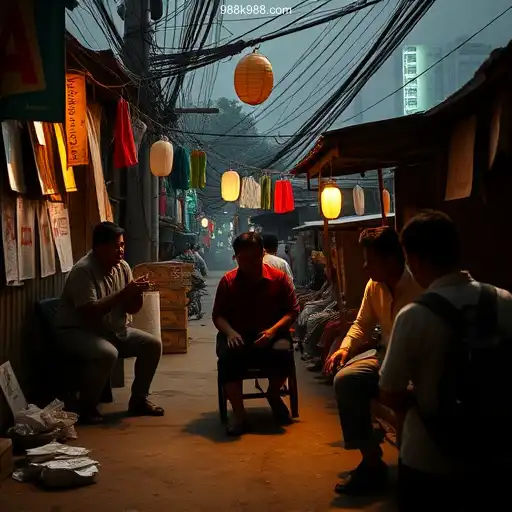
Understanding Jueteng: A Deep Dive into the Controversial Numbers Game
Jueteng is an illegal numbers game that has roots deeply embedded in the cultural and social tapestry of the Philippines. Despite numerous efforts to eradicate it, Jueteng continues to thrive, often fueled by complexities involving both poverty and politics. This article delves into the origins, mechanisms, and socio-economic implications of Jueteng, while also drawing attention to a burgeoning interest in online gaming, such as that found on 988k.Com Descubra o Melhor dos Jogos Online Brasileiros Hoje Mesmo, which offers a legal alternative to traditional games of chance.
The Origins of Jueteng
The history of Jueteng dates back to the Spanish colonial era. It began as a local lottery predominantly played in Luzon, the largest and most populous island in the Philippines. Over the years, it became a nationwide phenomenon. The game involves the selection of a pair of numbers, traditionally between 1 and 37, and players place bets on this selection. Winners are determined by a random draw, and those who accurately guess the winning numbers receive a payout.
How Jueteng Operates
The operational structure of Jueteng is both simple and sophisticated. The grassroots nature of Jueteng is what makes it so pervasive and resilient. At the core of its operation are the local "cobrador" or collectors, who take the bets from players and submit them to a "cabecilla" or coordinator. This coordinator manages the money and bets, working with a network that often spans municipalities and provinces.
Unlike formal gambling establishments, Jueteng lacks a physical infrastructure and relies heavily on trust and word-of-mouth within communities. It operates outside the boundaries of regulation, making it difficult for authorities to dismantle. Despite its illegal status, many argue that the game provides a source of livelihood for impoverished communities where economic opportunities are scarce.
The Socio-Economic Impact of Jueteng
The socio-economic impact of Jueteng is a double-edged sword. On one hand, it provides employment to thousands of Filipinos who act as agents or collectors in the game. An often cited advantage is the provision of ready cash flow in rural areas, where banking and financial services might be inaccessible. Many claim that Jueteng assists in community welfare, with some proceeds allegedly used for public goods such as education and health services.
However, on the flip side, Jueteng is criticized for fostering corruption and dependency. The game's illegal nature makes it susceptible to manipulation, often involving local police and government officials who receive kickbacks to turn a blind eye. Attempts to legalize jueteng-like gambling through government-sanctioned entities such as the Philippine Charity Sweepstakes Office (PCSO) have been implemented but with limited success in eradicating the illicit counterpart.
Political Ties and Challenges
The political landscape surrounding Jueteng is fraught with complexity. Historically, it has been an integral part of political campaigns in the Philippines. Politicians have been known to capitalize on Jueteng networks for electoral support and funding. Such relationships have entrenched Jueteng further into the local political economy, making eradication efforts appear futile.
Government efforts to stamp out Jueteng have often been met with resistance, not only from those who benefit directly from the system but also from community members for whom the game represents a financial safety net. While arrests and crackdowns periodically disrupt operations, Jueteng adapts and reemerges, often with renewed vigor and strategy.
The Rising Tide of Online Gaming
As traditional forms of gambling like Jueteng face legal obstacles, the rise of online gaming presents a lawful alternative that is both accessible and versatile. Platforms such as 988k.Com Descubra o Melhor dos Jogos Online Brasileiros Hoje Mesmo showcase the breadth of options available in the digital arena. From bingo to virtual casinos, these platforms appeal to a wide demographic and offer secure and regulated environments.
The convenience of online gaming is appealing; it allows players to participate from the comfort of their homes, sidestepping the risks associated with illegal operations. Moreover, the regulated nature of these platforms ensures fair play and reliable payouts, mitigating many of the issues that plaque illicit gambling operations.
Conclusion
Jueteng remains an enduring part of Filipino culture, persisting despite legal prohibitions and moral criticisms. While its existence highlights societal issues such as poverty and corruption, the advent of legal online gaming platforms offers new opportunities. As platforms like 988k.Com Descubra o Melhor dos Jogos Online Brasileiros Hoje Mesmo continue to grow, they provide a model for how technology can be leveraged to offer safer, transparent, and regulated gaming experiences. Embracing these new formats could represent a path forward in reconciling the allure of games of chance with the demands for legal and fair play.